
Am I Doing Kegels Right? How Biofeedback Improves Pelvic Health

Introduction
Pelvic floor exercises - especially Kegels - are often recommended as a quick fix for issues like urinary leakage or postpartum recovery. They seem simple and harmless, so many women start doing them without much thought.
But the real question is: ? Are you doing them right? Because incorrect technique - or doing Kegels when your pelvic floor needs relaxation instead of strengthening - can sometimes make symptoms worse rather than better.
The Hidden Problem
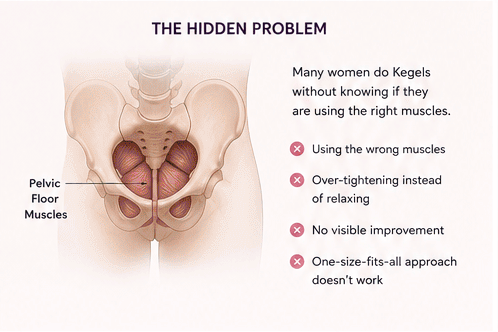
For many women, Kegels become a routine - something they try to do consistently. But over time, they may notice little to no improvement, ongoing symptoms like leakage or discomfort, and a quiet sense that something isn't quite right. The challenge is that pelvic floor muscles aren't visible - you can't see them working, and it's not always easy to feel if they're activating correctly. As a result, many women unknowingly engage the wrong muscles, over-contract instead of relaxing, or follow a one-size-fits-all approach. What feels like effort may not always be effective.
A Shift from Guessing to Understanding
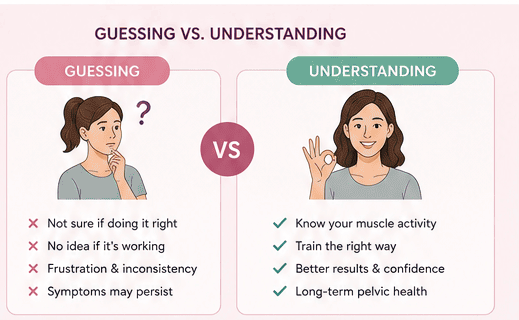
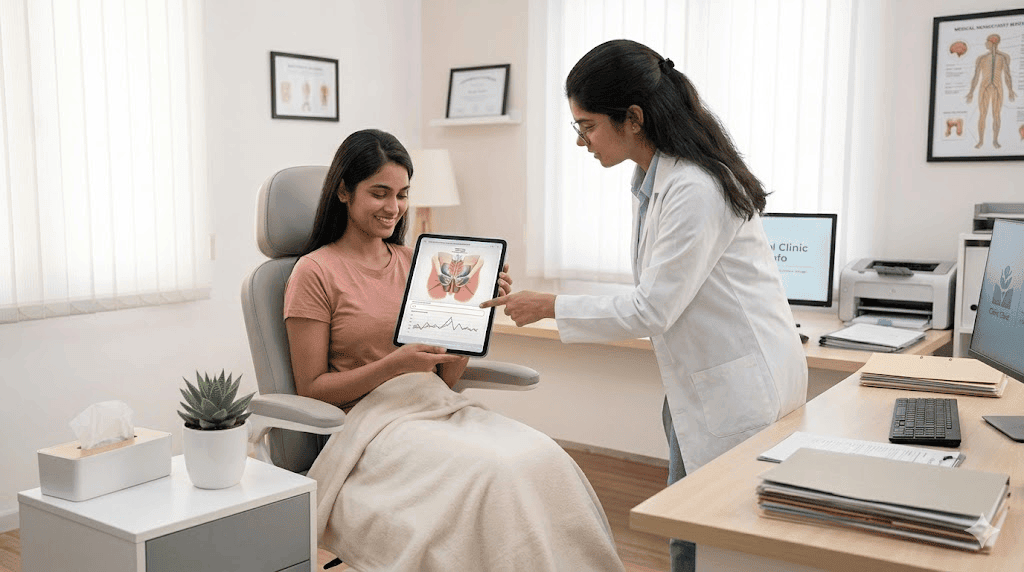
What if, instead of guessing, you could understand what your muscles are doing? In clinical practice today, assessment tools are helping bridge this gap by providing real-time insights into muscle activity - making the invisible, visible.
Tools like Pheezee use biofeedback to show how your muscles respond during exercise. This means you no longer have to rely on assumptions - you can clearly see whether you're activating the right muscles, if your contraction is effective, and how well your body relaxes after effort. It shifts the approach from trying harder to training smarter.
The Moment of Realisation
Many women are surprised to learn that not all pelvic floor issues are caused by weakness. In fact, for some, the muscles are already too tight, and doing more strengthening exercises can make symptoms worse. In these cases, what the body truly needs is relaxation rather than additional effort. This is where awareness becomes powerful - once you understand what your body needs, you stop doing more for its own sake and start doing what is right for you.
Why This Matters
Pelvic health is closely linked to confidence, daily comfort, and emotional well-being. When something feels "off," it's easy to ignore it or assume it's normal. But small misunderstandings - like doing the wrong type of exercises - can quietly affect quality of life over time.
Pelvic floor function is not just about strength; it's about balance - the ability to contract, relax, and coordinate effectively. Understanding this shifts the focus from simply doing more exercises to doing what your body needs.
How Pheezee Supports Your Pelvic Health Journey

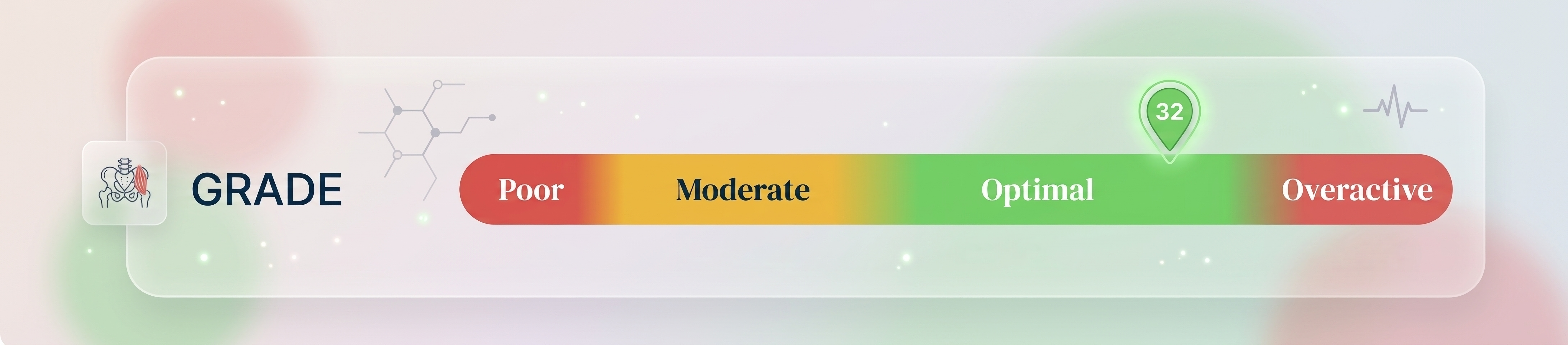
Awareness is important - but objective understanding is what enables the right intervention. Pheezee helps identify whether pelvic floor muscle activity is normal or abnormal, giving a clear starting point instead of relying on assumptions.
Based on this assessment, clinicians can analyse and prescribe the right exercises - whether the focus is on relaxation, coordination, or strengthening. Pheezee also enables strength and endurance testing, helping determine how effectively the muscles contract and how long they can sustain that contraction.
Since pelvic floor movement cannot be seen directly, Pheezee provides real-time, objective feedback, allowing patients to understand if they are activating the muscles correctly. Over time, this makes it possible to track progress, improve accuracy, and build confidence in performing exercises.

Together, this shifts the journey from uncertainty to clarity - where each step is guided, measurable, and truly aligned with what the body needs.
In short, it acts as both a diagnostic and training tool - helping clinicians guide better, and patients perform exercises with clarity and confidence.

Be the first to comment on this post